
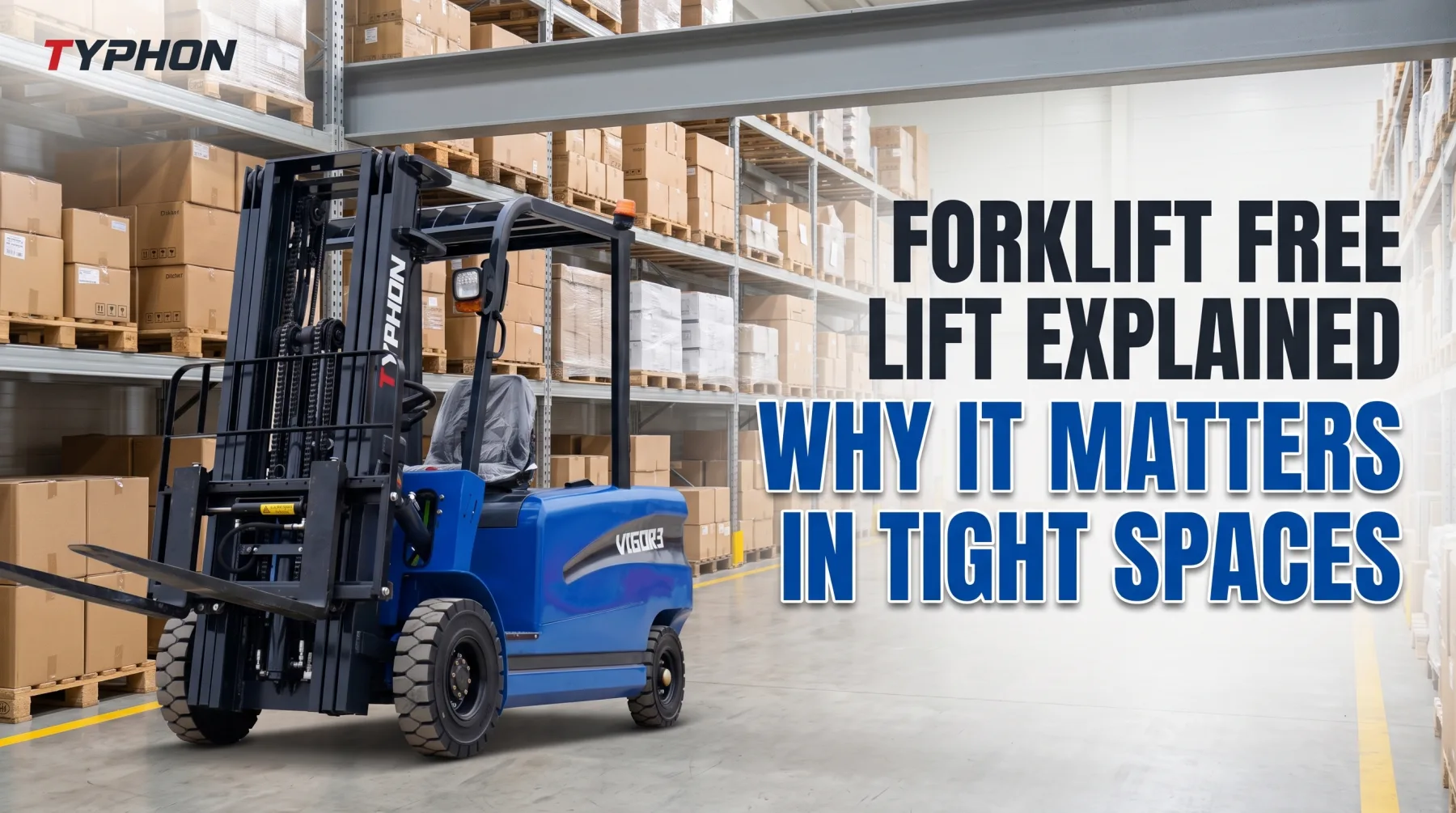
Forklift Free Lift Explained: Why It Matters in Tight Spaces
A warehouse manager orders a new forklift to work inside a fleet of shipping containers, confident the machine's tall lift height will handle the stacking he needs. Delivery day arrives, the operator backs into the first container, and the mast's inner section shoots up the moment he raises the forks, slamming into the container roof before a single pallet clears the floor. The lift height on the spec sheet was never the problem. The machine simply couldn't raise a load without the mast growing taller, and nobody checked the one number that mattered for working under a low ceiling. That costly oversight is exactly why free lift deserves a clear explanation before you pick a forklift for tight quarters.
Free lift is one of the most misunderstood specs on a forklift, yet it decides whether a machine can work under low ceilings, inside trailers, or through standard doorways. Put simply, it's how high the forks rise before the mast starts to extend upward. This guide breaks down what free lift actually means, how it differs from total lift height, where it matters most on the job, how mast types change it, the specs to confirm before you buy or rent, and the value the right choice returns. Here's what to know before the forks leave the ground.
Breaking Down What This Spec Really Means
Free lift is the distance the forks travel upward before the mast begins to raise its own height. Picture a forklift parked under a low ceiling: as the operator lifts, the forks climb while the top of the mast stays put, right up until the free lift limit is reached. Past that point, the inner mast rail extends upward to keep lifting, and the machine grows taller.
That pause before the mast grows is the whole value of the spec. A machine with generous free lift raises a load a meaningful distance without adding a single inch to its overall height, which is exactly what a tight space demands. Low free lift means the mast starts climbing almost immediately, so the machine gets tall fast even for a modest lift.
Key takeaway: Free lift measures how high the forks rise before the mast extends upward. The more free lift a machine has, the more work it does under a fixed ceiling, so this single number often matters more than maximum lift height in a confined space.
How It Stacks Up Against Total Lift Height
Total lift height and free lift answer two very different questions, and confusing them is where buyers go wrong. Maximum lift height tells you how high the forks reach at full extension, mast and all. Free lift tells you how high they reach *before* the mast grows, while the machine stays at its collapsed height.
Consider what each number governs. A forklift might boast an impressive maximum lift height yet offer almost no free lift, meaning it stacks high in an open warehouse but can't raise a pallet an inch inside a container without hitting the roof. The two specs simply don't measure the same thing, so a strong number in one column tells you nothing about the other.
Here's the catch for tight-space work: maximum lift height rarely helps under a low ceiling, because you can't use it without the mast rising into the obstacle above. Free lift is the spec that decides how much lifting you actually get in a height-restricted area.
Key takeaway: Maximum lift height is about reach in open space; free lift is about lifting without growing taller. Check both, but let free lift drive the decision whenever a ceiling, a trailer, or a doorway limits your headroom.
Where This Feature Earns Its Keep
Low-clearance environments are where free lift stops being a footnote and starts being essential. Loading and unloading inside shipping containers, semi-trailers, and box trucks all demand a machine that can raise a pallet under a fixed roof, and that capability lives entirely in the free lift spec. A machine without it simply can't do the work.
Doorways and low-ceiling buildings press the same requirement. Moving loads through standard entrances, working in basements or mezzanines, and stacking under sprinkler lines or ductwork all cap how tall the machine can get, so the forks need to rise while the mast holds steady. Racking a lower shelf inside a height-restricted aisle rewards the same trait.
Real-world framing makes it concrete. If you're managing a crew that loads floor-stacked pallets into 40-foot containers all day, high free lift lets them raise and place loads inside without the mast ever clearing the container roof, which turns an impossible job into a routine one.
Key takeaway: Free lift matters most anywhere a ceiling limits you: containers, trailers, doorways, basements, and low buildings. In those settings, it isn't a nice-to-have; it's the spec that decides whether the machine works at all.
How Mast Design Changes the Numbers
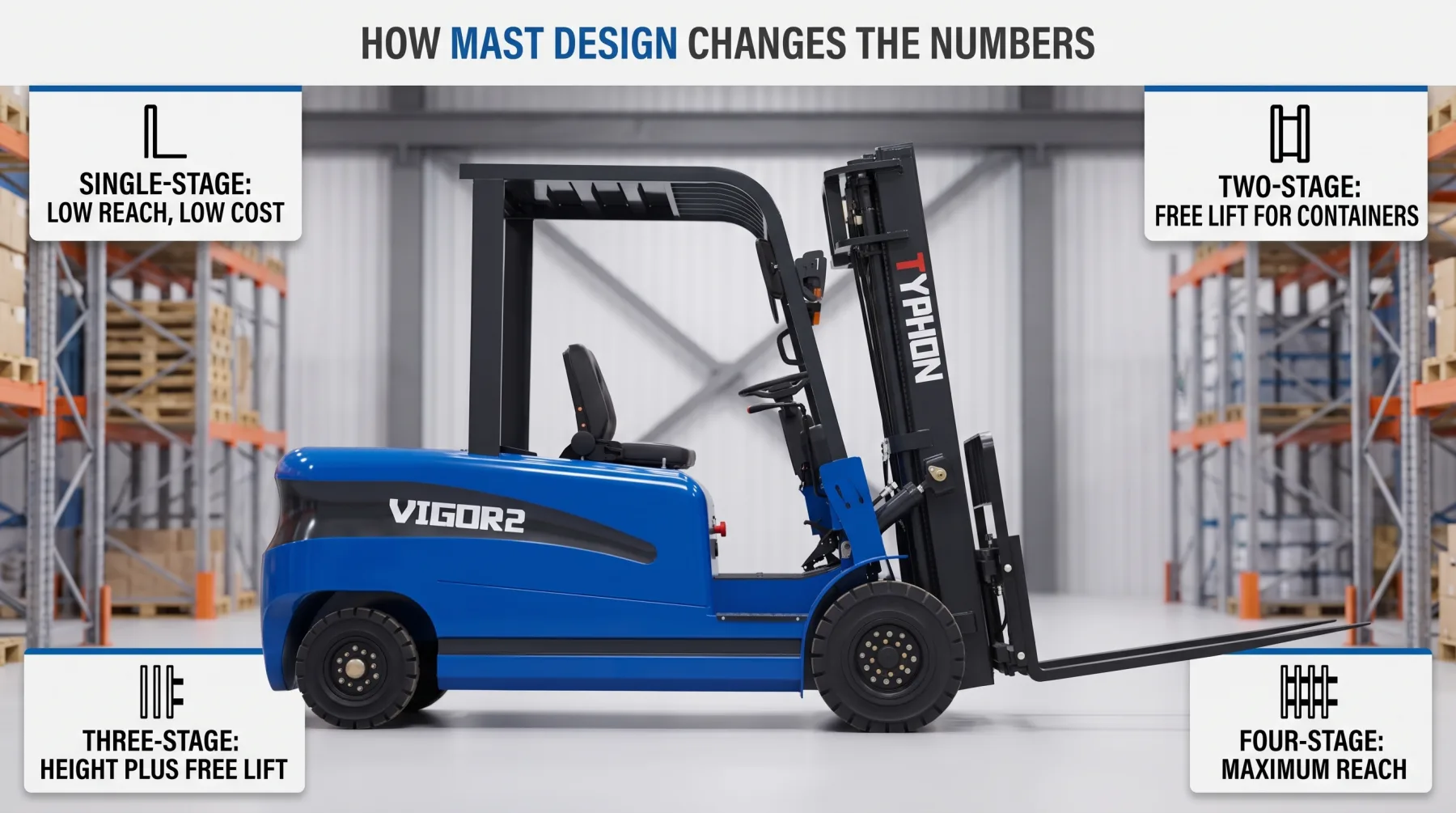
Mast type is the single biggest factor in how much free lift a machine offers, so knowing the common designs helps you match a mast to your space. Each configuration handles free lift differently, and the differences are dramatic. Here's how the main mast types compare:
- **Single-stage mast:** One set of rails with no telescoping section. Free lift equals the full lift height, but total reach stays low, so these suit only light, low-stacking work.
- **Two-stage (duplex) mast:** Two rail sets. Standard duplex masts offer limited free lift, while a **full free lift duplex** uses a center cylinder so the forks rise the full inner height before the mast extends, ideal for containers and trailers.
- **Three-stage (triplex) mast:** Three rail sets for high stacking. A full free lift triplex combines tall maximum reach with generous free lift, letting the machine both stack high in open aisles and lift under low ceilings.
- **Quad (four-stage) mast:** Four rail sets for the highest reach. These prioritize maximum height and are chosen when extreme stacking matters more than tight-space work.
Full free lift is the phrase to watch for. A mast labeled "full free lift" raises the forks the entire height of the closed mast before any section extends upward, which is exactly what container and trailer work demands. A standard mast without that feature gives you only a few inches of free lift before it starts to grow.
Key takeaway: Mast design dictates free lift. If your work involves low ceilings, look specifically for a full free lift duplex or triplex mast rather than assuming any tall machine will do the job.
Specs to Confirm Before You Buy or Rent
Numbers decide whether a forklift fits your space, so gather them before you commit rather than after delivery. The right questions upfront save a wasted machine and a lost day. Run through these specs before you sign anything:
- **Free lift height:** Confirm the exact free lift figure, not just the maximum lift height, and match it to the load height you need to reach under your lowest ceiling.
- **Collapsed (lowered) mast height:** Verify the machine's closed height clears your doorways, container roofs, and trailer openings, since this is the height the machine holds through its full free lift range.
- **Maximum lift height:** Check that full extension still reaches your tallest racking, so the machine covers both tight and open work.
- **Mast type:** Confirm whether the mast is standard or full free lift, since the label alone tells you most of what you need.
- **Load capacity at height:** Confirm the rated capacity holds at the heights you'll actually lift, since capacity often drops as the mast extends.
- **Overhead guard height:** Factor the guard into your clearance math, since it can be the tallest point on the machine in a low doorway.
Measure your real environment first. Note the height of your lowest doorway, the interior clearance of your containers or trailers, and the ceiling height across your work areas, then match every machine you consider against those hard numbers.
Key takeaway: Never shop on maximum lift height alone. Confirm free lift, collapsed mast height, and mast type against your measured space, and the machine you choose will actually fit the work.
The Value the Right Choice Returns
Cost is where the right free lift spec proves its worth, and the return shows up fast on the floor. A machine matched to your space works efficiently inside containers and under low ceilings, while a mismatched one sits idle or forces slow, awkward workarounds that eat labor hours every shift. The correct spec turns a bottleneck into a smooth operation.
Productivity compounds that value across the season. When a forklift can load a trailer or stack under ductwork without repositioning, tilting loads, or double-handling, the crew moves more product with less effort, and jobs that once demanded two machines or a manual assist get done by one operator. That efficiency pays back the machine's price in saved time.
Whether buying beats renting comes down to how often you work in tight spaces. Steady container, trailer, or low-ceiling work usually justifies owning a full free lift machine outright, while an occasional low-clearance job may favor renting the right mast for those windows rather than owning a specialized machine that mostly sits idle.
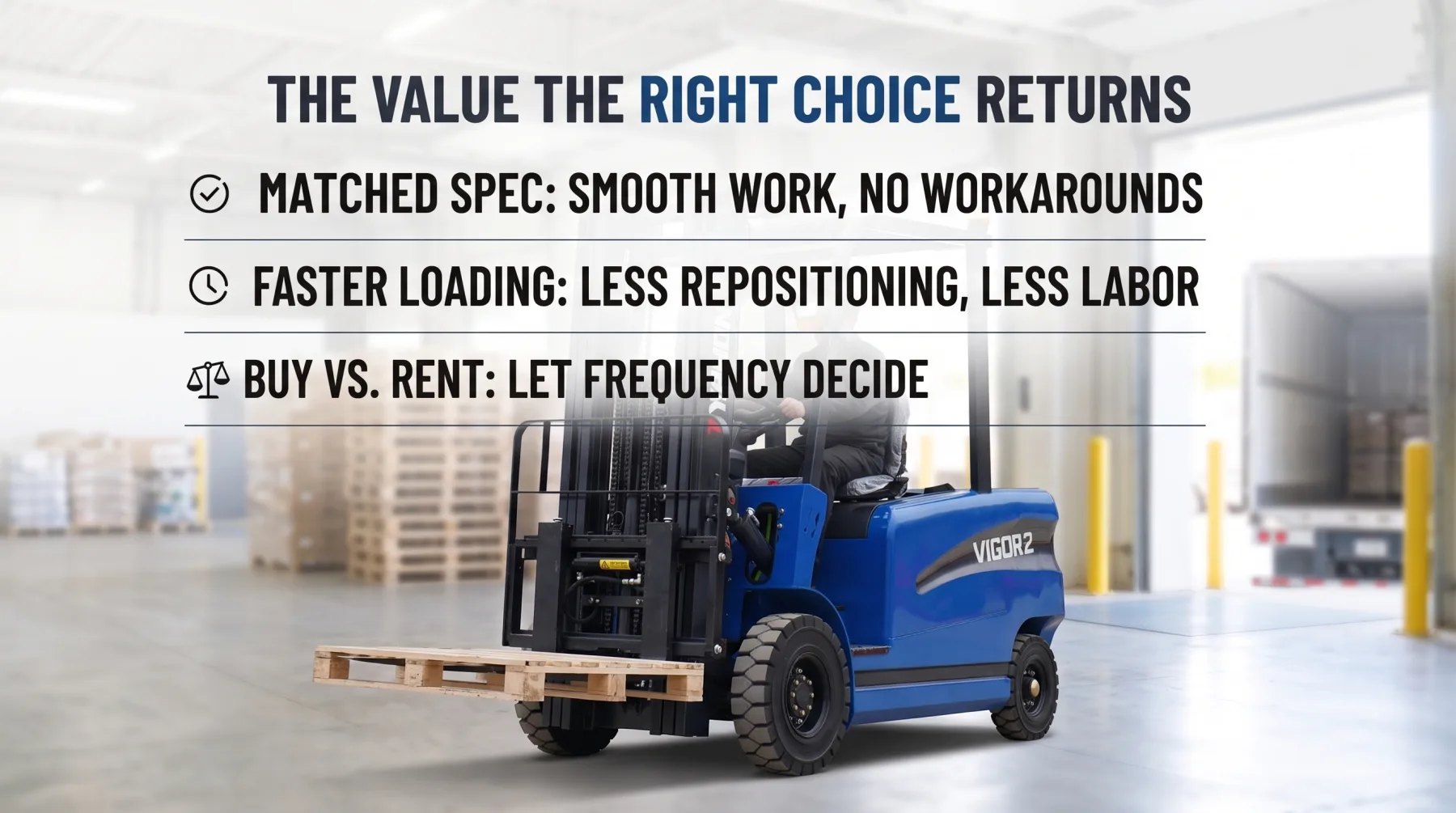
Key takeaway: The right free lift spec pays back through steady uptime and faster loading in confined spaces. Weigh how often you face low ceilings against the cost of the machine, and let that frequency guide buying versus renting.
Conclusion
Free lift explains how high a forklift's forks rise before the mast grows taller, and in any height-restricted space, it matters far more than maximum lift height. Start by understanding that free lift and total lift measure different things, then recognize where the spec earns its keep: containers, trailers, doorways, basements, and low-ceiling buildings. Match the mast to the job by looking specifically for a full free lift duplex or triplex design, and confirm free lift height, collapsed mast height, mast type, and capacity at height against your measured space before you buy or rent. Get it right, and one machine handles tight-space work that would otherwise stall your whole operation. Measure your lowest clearance, check the free lift number, and never assume a tall machine can lift under a low roof. When you're ready to put a dependable forklift with the right mast to work, reach out to a trusted equipment specialist who can pair a reliable machine with the results your operation depends on.
Frequently Asked Questions
What does free lift mean on a forklift? Free lift is the height the forks rise before the mast begins to extend upward. During that range, the top of the mast stays at its collapsed height while the forks climb, which lets the machine lift a load without getting taller. It's the spec that decides how much work a forklift can do under a low ceiling, inside a container, or through a standard doorway.
What is the difference between free lift and total lift height? Total lift height is how high the forks reach at full mast extension, while free lift is how high they rise before the mast grows at all. A forklift can have a tall maximum lift height yet almost no free lift, meaning it stacks high in open space but can't raise a pallet under a low roof. In tight spaces, free lift is the number that counts.
Do I need a full free lift mast? You do if you regularly load containers or trailers, work under low ceilings, or move loads through height-restricted doorways. A full free lift mast raises the forks the entire closed height of the mast before any section extends, so the machine lifts without growing taller. If your work stays in open, high-ceiling areas, a standard mast may be enough.